
Who Owns It?
This short exhibition features eight works of art that have faced high profile repatriation cases - some with positive outcomes and others with unhappy endings. While some objects have gone back to their rightful owner, many have landed on museum walls with no acknowledgement of the people who commissioned and bought the pieces. The exhibition "Who Owns It?" challenges viewers to develop their own opinions on specific repatriation cases and to come face to face with the battles fought by the descendants against museums, governments, and private individuals.
For visitor reference the pieces of art with frames are cases that were resolved and those unframed highlight cases that went against the rightful owner or are still currently being reviewed.
Click here to enter the exhibition and select the artwork of your choice to begin learning.
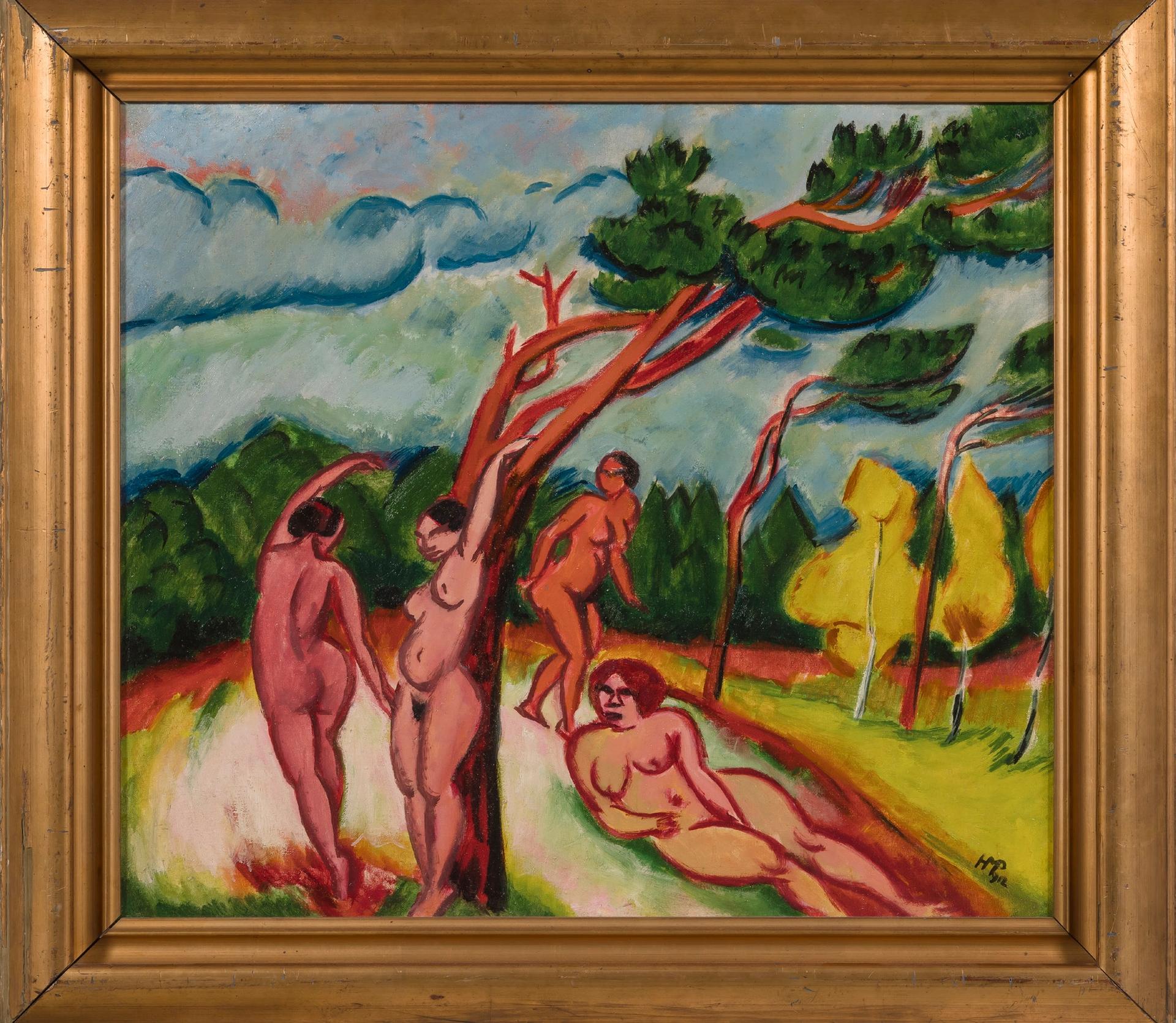
Nus Dans un Paysage
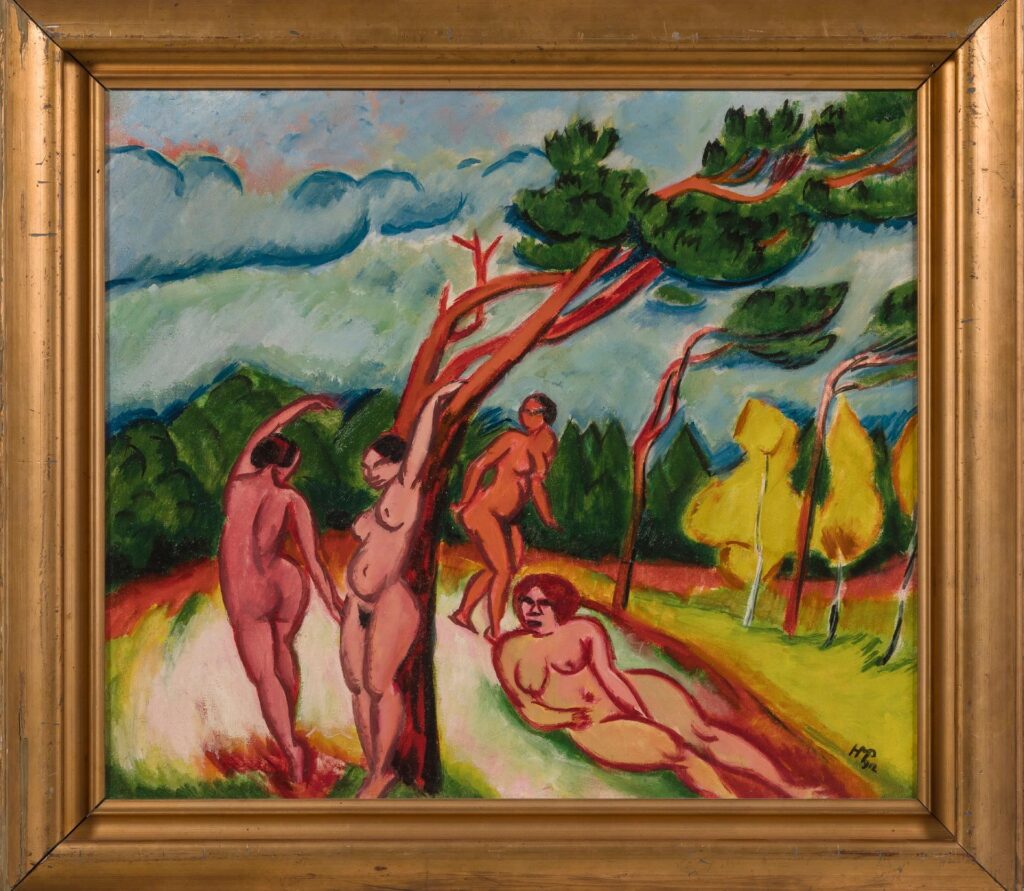
Max Pechstein's 1912 Nus Dans un Paysage was recently returned to its rightful heirs after 80 years of hanging on the walls of the Musee national d'art moderne in Paris, France. Hugo Simon, a powerful Jewish banker and collector fled Berlin for Paris with the piece in the early 1930s, later exhibiting the painting in a London gallery exhibition in 1938.
While both the French government and the heirs to the piece - more specifically Rafael Cardoso - are unsure of the exact date of when the piece was looted by the Nazi's, it was determined that the piece was left in Simon's French apartment when he was forced to flee again, this time to Brazil. 1
While the piece was restituted back to Simon's heirs in July 2021, the piece remained open to the public in a special exhibition at the Pompidou in Paris honoring Hugo Simon and his influence on German culture. 2
With the help of the French government, Cardoso and the rest of the heirs, were one of the lucky families that received their art with little push back. This repatriation case is a good example of France's new initiative to return to or rightfully acknowledge the rightful owners of all suspected stolen works of art. 3
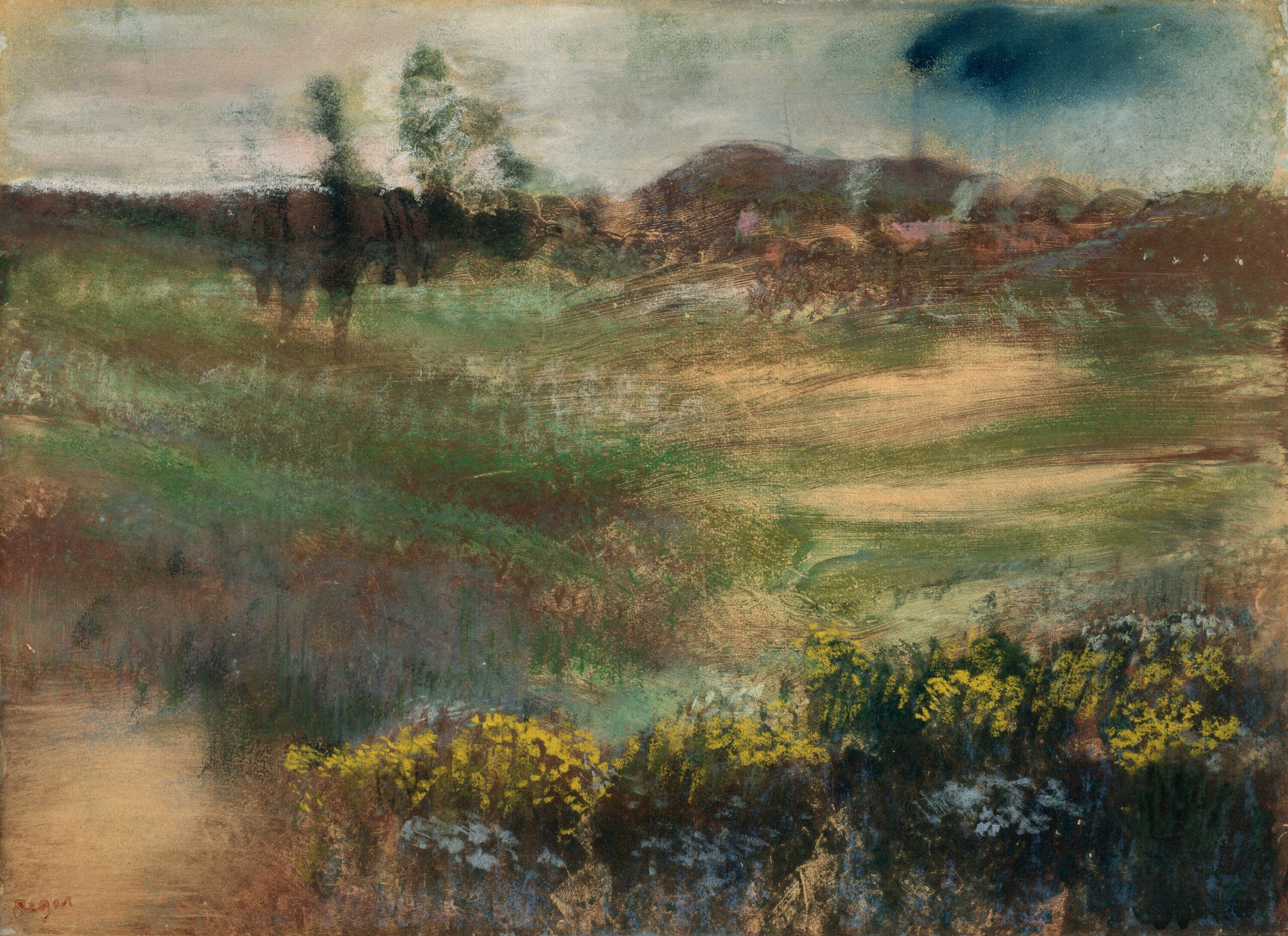
Landscape with Smokestacks
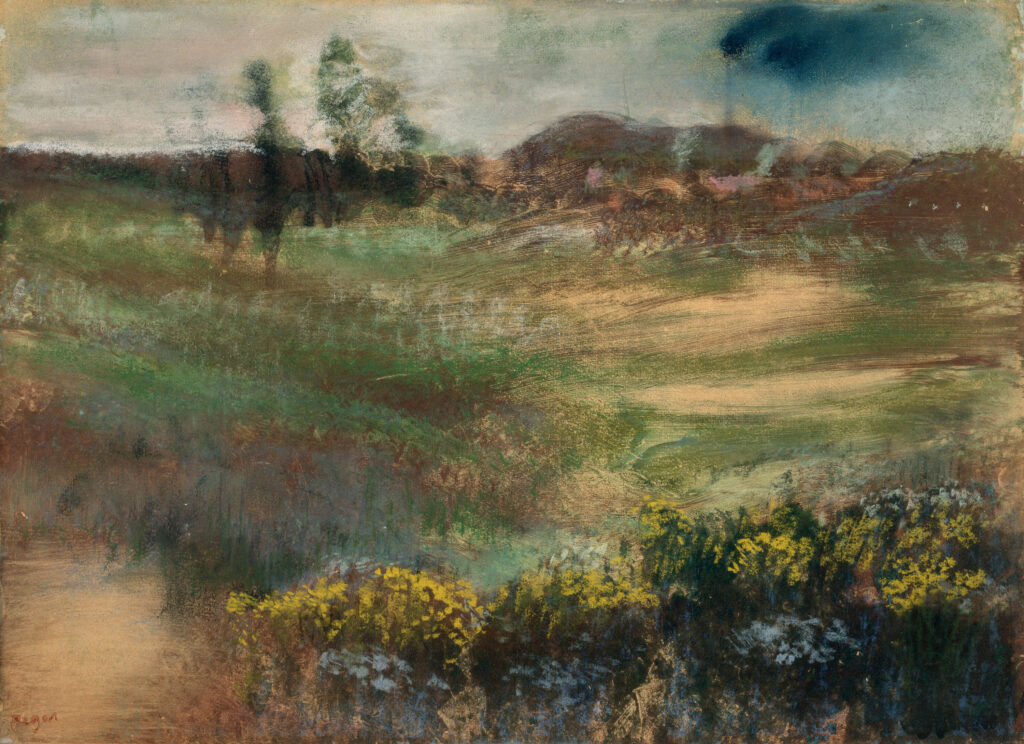
This Edgar Degas monotype titled Landscape with Smokestacks was the center of a court case that was never meant to be. Originally owned by the Gutmann family before World War Two, the monotype has lived in a private collection since the end of the war, unseen by the eyes of the Gutmann family - now the Goodman's - for over fifty years. The initial claim for repatriation was met with backlash from the private owner of the piece, a pharmaceutical company heir. Claiming that the piece was sold prior to the war in Switzerland and that it was not a part of the Gutmann Collection seized by the Nazis, the heir declined the claim for repatriation. 4
While the Goodman family prepared to take the private collector to court for not having outstanding physical evidence for the sale of the painting prior to the war, the private collector continued to fight back. Eventually, due to both parties not wanting to cause more harm and media attention, it was proposed that the piece be sold/donated to a museum of both parties choice and the compensation would go to the Goodman family. While this was not what the family wanted, it was chosen as the best and least harmful option. The Art Institute of Chicago eventually bought the painting and that is where it stays today. 5
This piece may never have had its day in court or its proper repatriation to the rightful heirs, but it does show that for many families seeking restitution, compromise is the only answer to avoid a court case. Having been the first Nazi-Era repatriation case settled on United States soil, this case set the ground for other's in the U.S to start the fight for their works of art. 6 To bring awareness to the issue of compromise and how families are often taken advantage of in the repatriation process, this piece remains unframed. Finally, it is important to note that the entirety of the Gutmann Collection itself shows that while things may have been sold before the war there is often outstanding evidence that these sales were forced and the owners blackmailed into selling for way below the expected price just to stay alive.
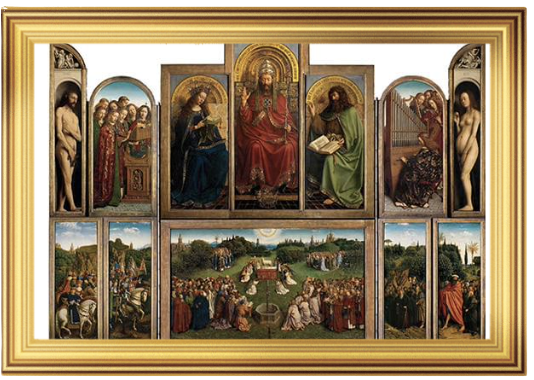
The Ghent Altarpiece
The Ghent Altarpiece was the first piece of art to be successfully repatriated back to its original country through the Munich Central Collecting Point after World War Two. The piece was successfully given back to St. Bavo's Cathedral after a tour around Belgium. While the repatriation of the altarpiece has been used as a token example of how the United States and the Monument Men helped art restitution after the end of the war in 1945, it also highlights how art was used as propaganda to distract from the United States own plundering of art works after the war. 7
The United States - while creating both the Munich Central Collecting Point and the Monument Men division of the U.S Army - was not an innocent party in the plundering of precious pieces of art from Europe. Many pieces not immediately restituted after the war were sent back to Washington D.C or museums around the country, where they still remain today. Other pieces, such as The Ghent Altarpiece, were used as "token restitutions" that provided a good backdrop for a photograph of military generals or could be shown off in the first few weeks after the war. 8 Even today, the altarpiece has been used as U.S propaganda with its starring role in the 2015 film Monument's Men.
Despite its use as propaganda, The Ghent Altarpiece has also proved to be a learning piece for art conservators. Many objects stolen by the Nazi's were heavily damaged either by their handlers or through secondary sources such as smoke and humidity. The altarpiece and many other pieces have been carefully restored over the years by many art conservators eager to learn how detrimental the looting and subsequent hiding of objects plays a role in conservation. 9 While the altarpiece has travelled around the world as both an object of learning and as a piece of propaganda, it still remains one of the most successful art repatriation cases to this day.

The Adoration of the Magi

The restitution case of The Adoration of the Magi to the heirs of the Bondy Collection has been one of many perilous disputes with the Republic of Austria. Similar to the Woman in Gold case, the Bondy family were forced to 'donate' their collection for contribution to national identity, this time after World War II had ended. While many pieces in the collection have been restituted to the family, The Adoration of the Magi eventually ended up in the Metropolitan Museum of Art in New York City and remains there to this day as Austria and the Bondy family continue to battle. As of 2021 the case was still being decided by both participating parties and until then the piece and many others from the Bondy Collection will continue to hang on the walls of their respective museums. 10
As part of the Metropolitan Museum of Art's initiative to bring awareness to objects with Nazi-Era provenance this piece's online collection post features a detailed timeline of how the painting ended up at the Met and how it was forcefully taken by the Nazi's in the late 1930s. 11
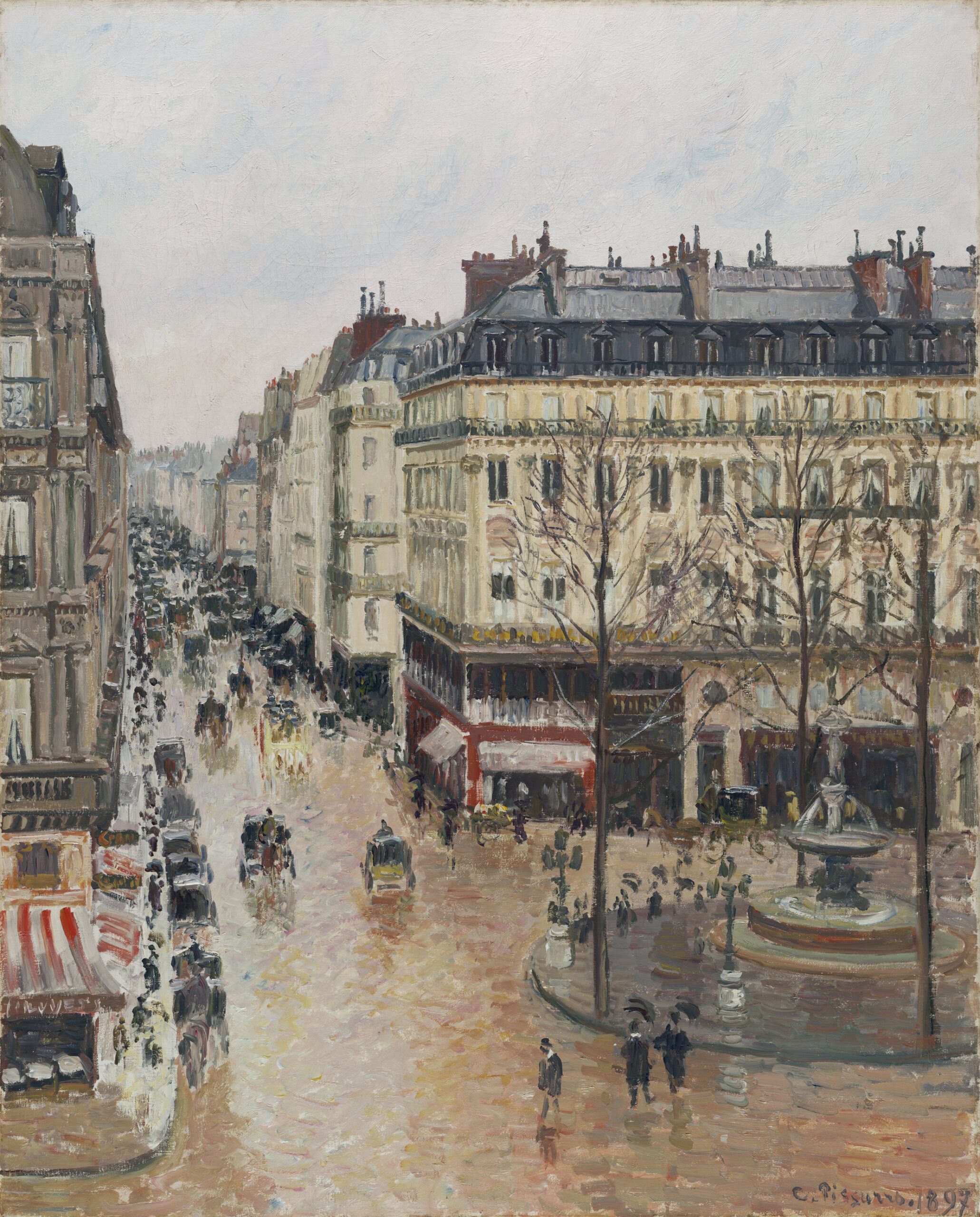
Rue Saint-Honore in the Afternoon, Effect of Rain
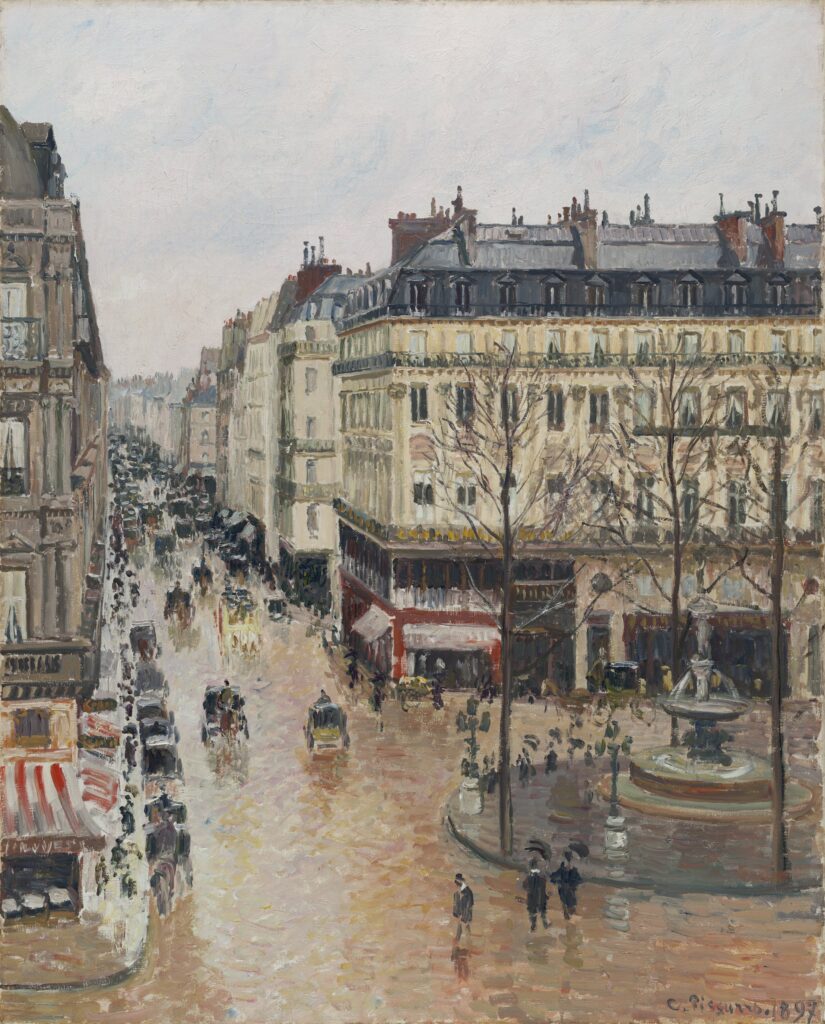
The repatriation case of the Rue Saint-Honore in the Afternoon, Effect of Rain is one with an unfortunate ending. Taking place over fifteen years, the descendants of Fritz and Lilly Cassirer have fought a hard battle against Thyssen-Bornemisza Museo Nacional (Spain) where the Pissarro painting still resides. The Museo Nacional prides themselves as the museum for everyone, however they have continued to deny that they knew the painting had a suspect provenance. 12 With the trial taking place in San Diego, California, the Museo Nacional was able to use 'good faith' intent to make the claim that because they did not suspect an unclear provenance they did not buy the piece knowing it was stolen. This coincides with Spanish law that states a buyer or collector can keep the artwork it purchased if they bought it without knowing its stolen history. 13
The Cassirer heirs were rightfully upset with the courts, however no action on the part of the museum has been taken to rightfully name the original owner of the painting and no information has been placed on their website stating anything about the trial or its Nazi-Era history. 14This is an unfortunate case of a museum and government not wanting to take action for stolen objects and return them or work out a deal with the rightful owners.
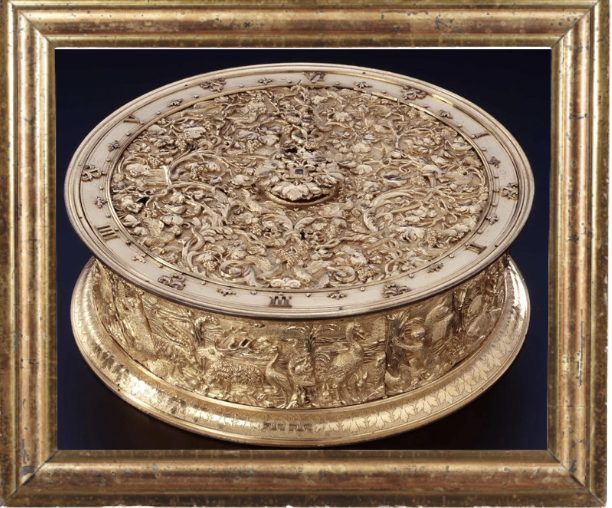
The Orpheus Clock
Similar to the The Women in Gold the Orpheus Clock has become one of the most popular Nazi-Era repatriation cases of the twenty first century. Simon Goodman - the heir of the prominent Jewish family the Gutmanns - started the case to get ownership rights for the Orpheus Clock after discovering his father's life work of trying to relocate and repatriate his families extensive art collection. Goodman discovered the clock at the Landesmuseum in Zurich where it had gone unknown for decades. Striking a deal with the museum Goodman decided to gift the clock to the museum for an undisclosed sum. 15
For Simon Goodman this was a step in the right direction in obtaining ownership rights or the physical pieces of his families collection. Writing a book centered around his family's struggle and the Orpheus Clock case, Goodman discusses the struggles of locating objects with limited online collections and minimal provenance history. 16 Through decades of hard work and research the Goodman family has only just begun their quest for repatriation. Goodman's case is a prominent example of how successful privately led cases can go but also highlights the struggle to locate objects not made accessible by private and public collections.
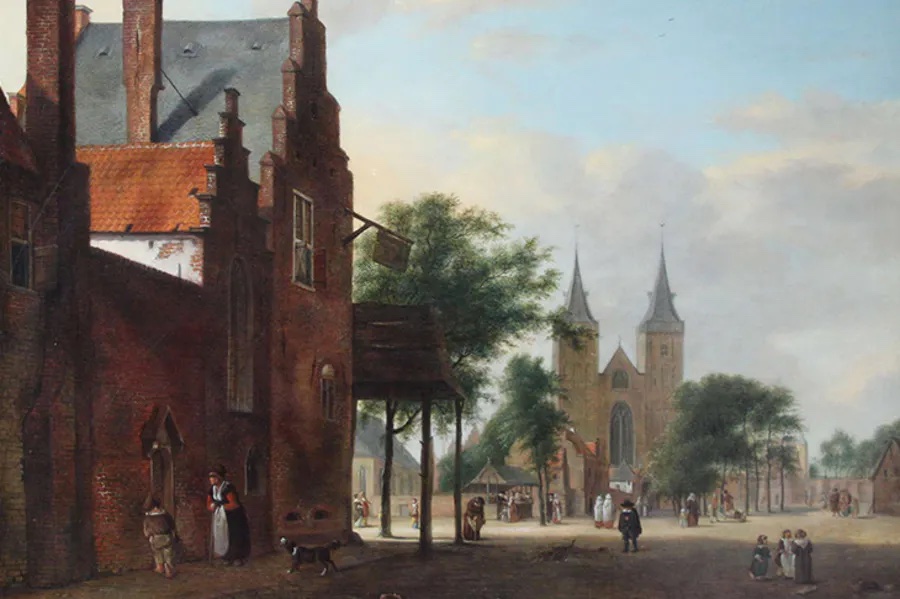
View of a Dutch Square
Figure 18: Jan van der Heyden, View of a Dutch Square, 17th Century, Heirs of Gottlieb and Mathilde Kraus.
While the View of a Dutch Square was recently repatriated to its rightful Jewish owners, its journey to its owners was not easy. This case highlights the wrongful doings of the Allied repatriation forces directly after the war ended in 1945. While the piece was stolen from the Klaus family in 1941, it was returned to the Bavarian state in 1945 and checked off as a successful repatriation case. Unfortunately for the Klaus family, the Allied powers ignored them and instead by sending the painting to the Bavarian state it ended up on the walls of a cathedral in Germany for over 50 years. 17
This piece is part of a larger controversy that broke in 2016 when it was revealed that the Allies sent hundreds of pieces of art back to the Nazi ruled Bavarian state. Many of these pieces have yet to be repatriated and if so, often come with unwilling owners that believe they acquired the piece rightfully from the state. The View of a Dutch Square case is a representation of a case that has eventually resulted in a happy ending but has also only started the beginning of the fixing of a mistake made by the Allies in 1945-46. For this reason the piece has not been given a frame for it represents the hundreds of pieces still missing to this day.
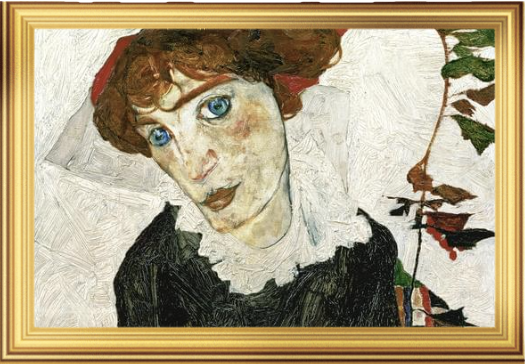
Portrait of Wally Neuzil
The Portrait of Wally Neuzil case is another repatriation case that was successfully tried in favor of the original owners in the United States. Spanning over ten years, the case eventually led to the successful repatriation of the portrait to the heirs of Lea Bondi Jaray who was forced to sell the painting in order to flee Germany prior to World War Two. 18
Prior to the trial that began in 1998, the painting hung on the walls of the Leopold Museum in Vienna, Austria and eventually was transferred illegally into the United States. After the trial and the ruling that the painting had been illegally taken from Jaray, the painting was repatriated to her heirs. Working with the Leopold Museum, it was established that the painting would go into the museums care for an undisclosed sum of money. 19 Similar to many successful repatriation cases, by giving the painting to a museum of the heir's choice, the heirs ensure that the piece of work will be correctly cared for while still being open to public viewing.
Header Image (Figure 11): MFAA officer James Rorimer supervises soldiers recovering works of art from Neuschwanstein Castle, Germany. National Archives, Washington D.C.
- Catherine Hickley, "France Returns Pechstein painting looted in occupied Paris to heirs of Hugo Simon, a banker and leading figure in German Cultural Life," The Art Newspaper, July 2, 2021, accessed April 30, 2022, https://www.theartnewspaper.com/2021/07/02/france-returns-pechstein-painting-looted-in-occupied-paris-to-heirs-of-hugo-simon-a-banker-and-leading-figure-in-german-cultural-life.
- IBID.
- Jane Recker, "France to Return 15 Works of Nazi-Looted Art to Jewish Families," Smithsonian Magazine, January 31, 2022, accessed April 30, 2022, https://www.smithsonianmag.com/smart-news/france-to-return-15-works-of-nazi-looted-art-to-jewish-families-180979487/.
- Judith H. Dobrzynski, "Settlement in Dispute Over a Painting Looted by the Nazis," The New York Times, August 14, 1998, accessed April 30, 2022, https://web.archive.org/web/20150527081721/https://www.nytimes.com/1998/08/14/us/settlement-in-dispute-over-a-painting-looted-by-nazis.html.
- "Landscape with Smokestacks," The Art Institute of Chicago, accessed April 30, 2022, https://www.artic.edu/artworks/151507/landscape-with-smokestacks.
- Judith H. Dobrzynski, "Settlement in Dispute Over a Painting Looted by the Nazis," The New York Times, August 14, 1998, accessed April 30, 2022, https://web.archive.org/web/20150527081721/https://www.nytimes.com/1998/08/14/us/settlement-in-dispute-over-a-painting-looted-by-nazis.html.
- Jenny Graham, "The Ghent Altarpiece after World War II: Restitution, Restoration, and Redemption," The International Journal of Cultural Property 28, no.3 (August 2021): 343 - 367.
- Jenny Graham, "The Ghent Altarpiece after World War II: Restitution, Restoration, and Redemption," The International Journal of Cultural Property 28, no.3 (August 2021): 343 - 367.
- "The Ghent Altarpiece," The Getty Foundation, accessed April 30, 2022, https://www.getty.edu/foundation/initiatives/past/panelpaintings/panel_paintings_ghent.html.
- "Provenance Research and Restitution in the Austrian Federal Collections," Bundesministerium, accessed April 30, 2022, https://provenienzforschung.gv.at/en/empfehlungen-des-beirats/beschluesse/.
- "The Adoration of the Magi," The Metropolitan Museum of Art, accessed April 30, 2022, https://www.metmuseum.org/art/collection/search/436509.
- "Camille Pissarro," Thyssen-Bornemisza Museo Nacional, accessed May 1, 2022, https://www.museothyssen.org/en/collection/artists/pissarro-camille/rue-saint-honore-afternoon-effect-rain.
- Matthew S. Schwartz, "Jewish Family Loses Legal Battle to Recover Painting Stolen by Nazis," American University Radio, May 2, 2019, accessed May 1, 2022, https://wamu.org/story/19/05/02/jewish-family-loses-legal-battle-to-recover-painting-stolen-by-nazis/.
- "Camille Pissarro," Thyssen-Bornemisza Museo Nacional, accessed May 1, 2022, https://www.museothyssen.org/en/collection/artists/pissarro-camille/rue-saint-honore-afternoon-effect-rain.
- Joselin Linder, "Inside the Search for the Legendary Orpheus Clock Stolen by the Nazis," New York Post, August 23, 2015, accessed May 1, 2022, https://nypost.com/2015/08/23/inside-the-search-for-the-legendary-orpheus-clock-stolen-by-nazis/.
- For a summary of Goodman's book see The Orpheus Clock entry on the Annotated Bibliography page.
- Nina Siegal, "A Painting Looted and Returned to Nazis Finally Goes to its Jewish Owners," New York Times, March 20, 2019, accessed May 1, 2022, https://www.nytimes.com/2019/03/20/arts/design/nazi-looted-art-cathedral.html.
- Egon Schiele, "Portrait of Wally Neuzil," Leopold Museum, accessed May 1, 2022, https://www.leopoldmuseum.org/en/collection/highlights/147.
- IBID