
Adele Bloch-Bauer I
by Gustav Klimt
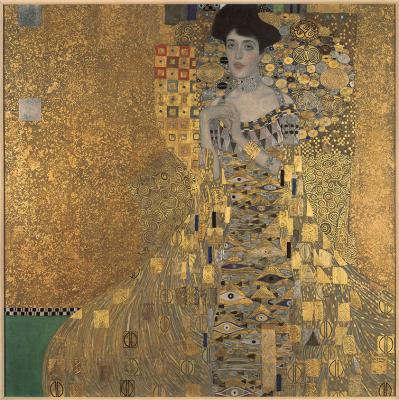
Figure 4: Gustav Klimt, Adele Bloch-Bauer I, Oil, Silver, and Gold on Canvas, 1907, Neue Galerie, New York.
Introduction
A 1907 painting created by Gustav Klimt for Adele Bloch-Bauer in Vienna, Austria has become the highest profile example of Nazi-Era repatriation cases. Seized by the Nazi's during World War Two, the painting took an extraordinary journey from the walls of the Bloch-Bauer apartment in Vienna to the Neue Galerie in New York City. Making stops at the Belvedere Museum and even the U.S Supreme Court, Adele Bloch-Bauer I - also known as The Woman in Gold - has become the most popular repatriation case to date. Plagued with anti-Semitic sentiments, repatriation laws, unwilling governments and museums, and an abundance of public attention, the painting took almost seventy years to return to its rightful owner. 1
The History
Follow Adele Bloch Bauer I's journey from its commission to its time at the Belvedere.
Learn More
The Court Case
Follow the trial of The Republic of Austria v. Altmann from the request by Maria Altmann to the U.S Supreme Courts decision.
Learn More
The Result
Follow the aftermath of the highly publicized court case and popular media's obsession with the painting.
Learn More
The History
From Apartment Walls to the Belvedere
Adele Bloch Bauer (Figure 6) was born in Vienna, Austria in 1881 to immigrant parents. 4 Bloch-Bauer was rushed into high Viennese society when she married Ferdinand Bloch, a son of a prominent Jewish sugar manufacturer.
While there were rumours of an affair between Adele Bloch-Bauer and prominent Viennese artist Gustav Klimt, credible evidence was never found. Despite the rumours, Klimt continued to paint Bloch-Bauer and eventually convinced her to join the reform movement of 1900s Austria.
The culmination of Klimt and Bloch-Bauer's relationship is shown in the immaculate craftsmanship Klimt put into Woman in Gold. By the time Klimt died in 1918, he had been pushed out of the Viennese art world and was heavily disregarded as an artist. Knowing this, Adele Bloch-Bauer pushed for her paintings done by Klimt to be placed in the Belvedere Palace and Museum upon her death. 5
While Adele Bloch-Bauer did write a small will before her death in 1925, she never explicitly stated that the Klimt paintings would belong to the Belevedere Museum. Bloch-Bauer wrote down in her will "I ask my husband after his death, to leave my two portraits and the four landscapes by Gustav Klimt to the Austrian Gallery in Vienna," never specifically stating that her husband was required to give them up. 6 This unspecified claim would eventually become the focus of the Nazi's claim for the Klimt's in the late 1930s and eventually the Austrian Government's in the 1990s with their battle against Maria Altmann - Adele Bloch-Bauer's niece.
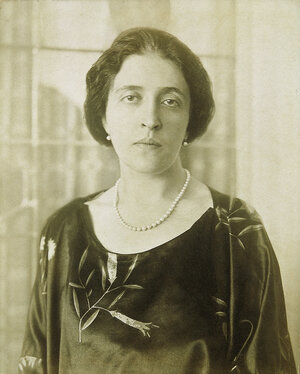
Figure 6: Adele Bloch-Bauer, Photograph, 1915, Austrian Archives.
The Court Case

Figure 7: Reuters/Maria Altmann, then 90, poses with Adele Bloch-Bauer I. Mirror Online.
Video 1: Klimt Recovery, ABC News, January 17, 2006. 7
From Vienna to the United States
Maria Altmann, with the help of American lawyer Randol Schoenburg and four other descendants, decided in the late 1990s that it was time to contest for the return of the six Klimt paintings seized by either the Nazi's or the Republic of Austria towards the end of World War II. It was believed by the family that Woman in Gold was illegally hanging in the Belvedere Museum in Vienna for over 50 years until 1998. 8 Prior to Altmann's original case, tried in Austria, the Belvedere Museum, under the direction of Adolf Hitler and other Nazi leaders, left out any trace of the Bloch-Bauer's association with Women in Gold under the notions of anti-Semitic values that any Jewish person should not be recognized for their collections. 9 By leaving the painting unnamed and not recognizing its Jewish heritage, the Belvedere and ultimately the Austrian government, contributed to the anti-Semitic theme of taking the Jewish community out of history.
The Austrian court case did not go in the direction Maria Altmann and Randol Schoenburg were hoping, with the Austrian government claiming that these paintings were part of Austrian national identity and that it would be detrimental for them to leave Austria. Unhappy with Austria's uncooperativeness and rule bending, Altmann pursued the case in the United States. Eventually, after going through several trials in Los Angeles, California, the case made it to the U.S Supreme Court. The Supreme Court justices eventually decided that the paintings were to belong to the descendants of Adele Bloch-Bauer because of the lack of recognition and forceful taking of the paintings by the Republic of Austria under the Nazi Regime. 10
The publicity around the Altmann case was sparked by its move to the United States. U.S news agencies began weekly reports on the case and it was heavily followed by the public. By the end of the trial, the roots and struggles of Nazi-Era repatriation were brought into the public foreground and no one could ignore the anti-Semitic traits heavily imbedded in many countries repatriation laws and actions.
The Result
"I would not want any private person to buy these paintings...It's very meaningful to me that they are seen by anybody who wants to see them, because that would have been the wish of my aunt," is what Maria Altmann said immediately after winning her case against Austria in 2004. 11
After the case was won, Maria and the other four descendants began splitting the arbitration money and deciding when and how to sell the paintings, valuing Adele Bloch-Bauer's wish for them to be public. Eventually the six Klimt paintings were sold at Christie's auction house in New York City in 2006. 12 Adele Bloch-Bauer I - as it had been renamed - was officially acquired by Ronald Lauder for the Neue Galerie in New York. While honoring Bloch-Bauer's wish for the painting to be open for public viewing, the Neue Gallerie does not allow private photographs of the painting, limiting once again Klimt's masterpiece to the world.
The attention surrounding the painting and court case did not die down after the painting was sold. The story recently went through a ressurgence in 2015 with the release of Woman in Gold, a movie starring Helen Mirren and Ryan Reynolds. The movie - highlighted in the trailer below - brings to light the inside hardships faced by Altmann and Schoenburg while imagining the real life emotions felt in the court room as the trial preceded.
Video 2: Woman in Gold, 2015. 13
Header Image (Figure 3 - Top Section): Created by author using news article titles from the New York Times.
Header Image (Figure 5 - History Section): The Priesters elegant apartment on the Ebendorferstrasse, Vienna. "Reunited: an El Greco and a De Witte stolen by the Gestapo," Christie's.
Header Image (Figure 8 - Result Section): An onlooker gazes upon Adele Bloch-Bauer I on the walls of the Neue Galerie, its new and final home. Neue Galerie.
- Patricia Cohen, "The Story Behind 'Woman in Gold': Nazi Art Thieves and One Painting's Return," New York Times, March 30, 2015, accessed April 30, 2022, https://www.nytimes.com/2015/03/31/arts/design/the-story-behind-woman-in-gold-nazi-art-thieves-and-one-paintings-return.html.
- Anne-Maire O'Connor, The Lady in Gold, (New York: Alfred A. Knopf, 2012) 290.
- Diane Haithman and Christopher Reynolds, "Court Awards Nazi-Looted Artworks to L.A. Woman," Los Angeles Times, January 17, 2006, accessed on April 30, 2022, https://www.latimes.com/archives/la-xpm-2006-jan-17-et-klimt17-story.html.
- Anne-Marie O'Connor, The Lady in Gold, (New York: Alfred A. Knopf, 2012) 11.
- Anne-Marie O'Connor, The Lady in Gold, (New York: Alfred A. Knopf, 2012) 66.
- Anne-Marie O'Connor, The Lady in Gold, (New York: Alfred A. Knopf, 2012) 68.
- Randol Schoenburg, "Klimt Recovery," ABC News, January 17, 2006, accessed May 3, 2022, https://youtu.be/WJui2PrV_8Y.
- United States Supreme Court, Republic of Austria v. Altmann, June 7, 2004, accessed April 30, 2022, https://www.supremecourt.gov/opinions/03pdf/03-13.pdf.
- Anne-Marie O'Connor, The Lady in Gold, (New York: Alfred A. Knopf, 2012) xvii.
- United States Supreme Court, Republic of Austria v. Altmann, June 7, 2004, accessed April 30, 2022, https://www.supremecourt.gov/opinions/03pdf/03-13.pdf.
- Anne-Marie O'Connor, The Lady in Gold, (New York: Alfred A. Knopf, 2012) 253.
- "The Woman in Gold," Christies, June 15, 2016, accessed April 30, 2022, https://www.christies.com/features/The-Woman-in-Gold-7494-1.aspx.
- "Woman in Gold Trailer," YouTube, accessed May 3, 2022, https://youtu.be/ZqC28wtsaig.